
The day you leave the hospital isn’t the end of recovery. It’s the beginning.
The room suddenly feels different.
The steady beeping of monitors has stopped. Nurses who have cared for you around the clock smile and wish you well. A folder filled with discharge instructions, medication lists, and follow up appointments is placed in your hands.
For a moment, there’s relief.
Then, as you walk through your front door, reality settles in.
“Are we really ready for this?”
“What if something goes wrong tonight?”
“How will I know if Mom is getting better… or worse?”
If you’ve ever cared for a loved one after a hospital stay, those questions probably sound familiar.
The transition from hospital to home is one of the most important moments in a patient’s recovery. While leaving the hospital often feels like crossing the finish line, it’s actually the beginning of a new chapter, one where healing continues without the constant support of doctors, nurses, and medical equipment just steps away.
That’s why starting Home Health Care immediately after hospital discharge can make a life changing difference.
Recovery Doesn’t End When You Get Home
Many patients believe that if they’re healthy enough to leave the hospital, they’re fully recovered.
Unfortunately, that’s rarely the case.
During the first few days at home, medications may have changed, strength is often limited, and the body is still healing. Something as simple as getting out of bed, preparing a meal, or walking to the bathroom can suddenly become exhausting.
These first days are also when complications are most likely to appear.
A small change in breathing.
A little more swelling than yesterday.
A slight increase in pain.
A bit of confusion that wasn’t there before.
To family members, these changes may seem normal.
To a skilled Home Health nurse, they may be the first warning signs that something needs attention.
Sometimes the Biggest Victories Are the Emergencies That Never Happen
Imagine your father has just returned home after being hospitalized for heart failure.
The first evening goes well.
He eats dinner, watches television, and everyone begins to relax.
The next morning, his feet seem a little swollen. He’s more tired than usual and becomes winded after walking only a few steps.
Most families would simply tell him to rest.
A Home Health nurse sees something different.
The nurse checks his vital signs, reviews his medications, assesses his breathing, and contacts his physician if necessary. Small adjustments made early may prevent those symptoms from becoming a medical emergency.
The goal isn’t simply treating illness.
It’s preventing it from becoming worse.
Why Waiting Can Be Risky
One of the most common things patients say is:
“Let’s wait a week and see how things go.”
It sounds reasonable.
But recovery doesn’t pause because healthcare services haven’t started yet.
Every day without professional support creates opportunities for small problems to grow.
A medication may be taken incorrectly.
A wound may begin showing early signs of infection.
Blood sugar may slowly rise.
Weakness may increase the risk of a fall.
Without someone trained to recognize these warning signs, families often don’t realize there’s a problem until it’s serious enough to require another visit to the emergency room.
Starting Home Health Care early helps catch those concerns before they become crises.
More Than Just a Nurse Visiting Your Home
Many people think Home Health Care simply means someone checks in every few days.
In reality, it’s a coordinated healthcare team working together to help patients recover safely.
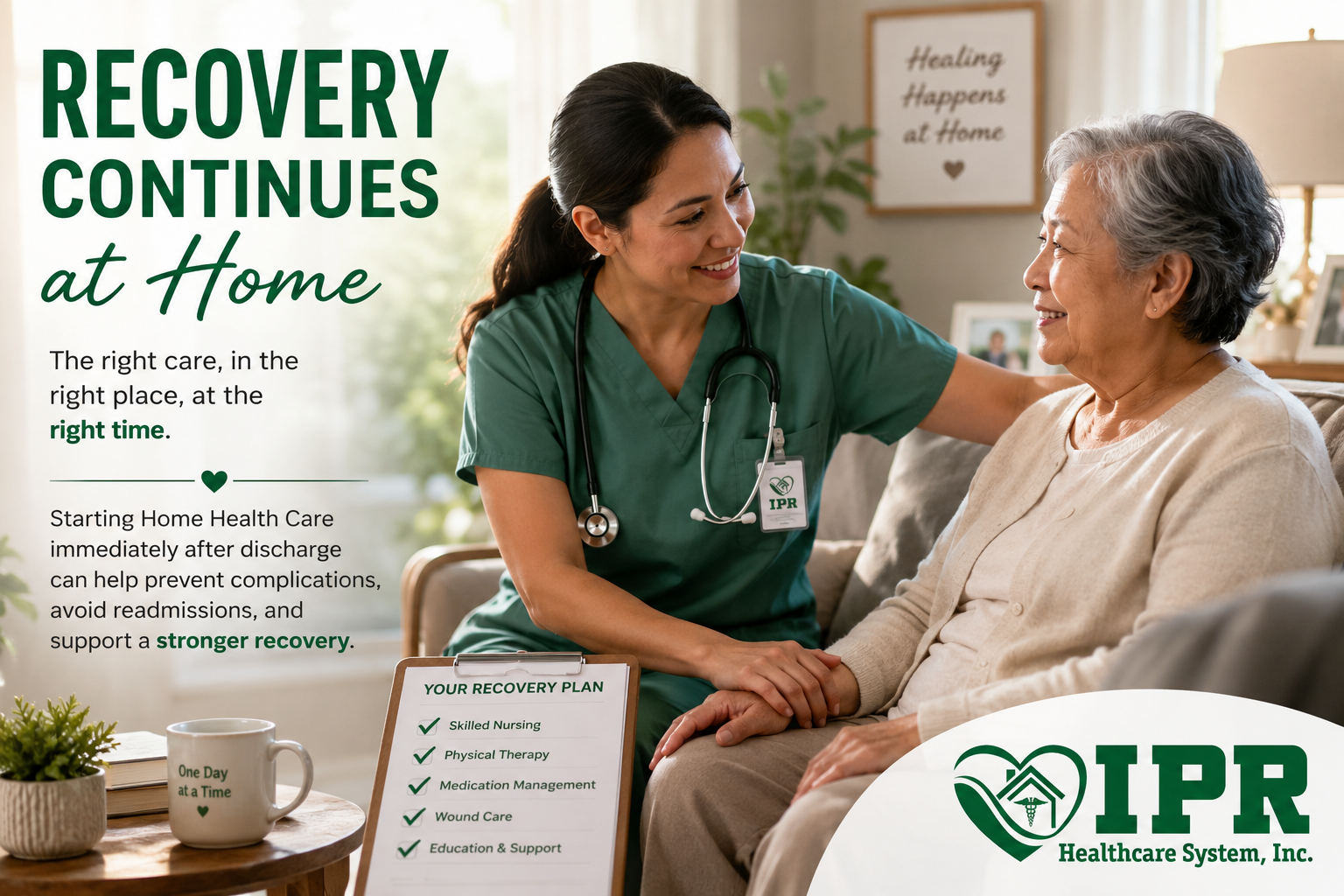
A skilled nurse monitors your condition, performs medication reconciliation, educates patients and caregivers, assesses wounds, monitors chronic diseases, and communicates important changes with your physician.
Physical therapists help rebuild strength, balance, endurance, and confidence after surgery, illness, or injury.
Occupational therapists teach patients safer ways to perform everyday activities like dressing, bathing, preparing meals, and moving around the home.
Speech therapists help patients recovering from strokes or neurological conditions improve communication, memory, cognition, and swallowing.
Every member of the team shares one goal:
Helping patients recover safely while remaining independent in the comfort of home.
Caring for the Caregiver
Home Health Care isn’t only about the patient.
It’s about the wife trying to remember seven different medications.
The daughter wondering if her father’s incision looks normal.
The husband asking himself whether today’s confusion is simply fatigue or something more serious.
Caregiving is an act of love.
But it can also be overwhelming.
Home Health professionals help families understand what to expect, answer questions, reinforce physician instructions, and provide reassurance during one of the most stressful periods of recovery.
Instead of facing uncertainty alone, families gain a trusted partner.
Healing Happens Best at Home
There’s something powerful about recovering in a familiar place.
Your favorite chair.
Your own bed.
Family photographs on the wall.
The sound of grandchildren laughing in another room.
Home offers comfort that no hospital ever can.
Home Health Care allows patients to receive skilled medical services while remaining surrounded by the people, routines, and memories that bring peace during recovery.
Healing isn’t only physical.
It’s emotional too.
Don’t Wait Until Something Goes Wrong
The days immediately following hospital discharge are among the most important in a patient’s recovery.
Starting Home Health Care as soon as possible gives patients access to skilled professionals who can monitor progress, identify problems early, educate caregivers, and communicate with physicians before small concerns become medical emergencies.
It isn’t a sign that someone is weak.
It’s a decision that places recovery first.
If you or someone you love is preparing to leave the hospital, ask your physician or discharge planner whether Home Health Care is the right next step.
Because the day you leave the hospital isn’t the end of the journey.
It’s the day healing truly begins.
Continue Your Recovery Journey with IPR Healthcare
Recovering at home is easier when compassionate healthcare professionals are by your side every step of the way. Whether you’re preparing for discharge, caring for a loved one, or simply looking to learn more about Home Health Care, IPR Healthcare System is here to help.
Learn More
🌐 Website
https://iprhealthcare.com/
Follow Us for Patient Education, Recovery Tips, Caregiver Resources, and Company Updates
📸 Instagram
https://www.instagram.com/iprhealthcare.tx/
📘 Facebook
https://www.facebook.com/iprhealthcaretx
💼 LinkedIn
https://www.linkedin.com/company/15583969/
Helping patients heal with compassion, dignity, and clinical excellence… right where they feel most comfortable. Home.