
The Real Heart Behind Home Health and Hospice Care
There’s a moment many families remember forever.
The hospital doors open. The discharge papers are signed. A loved one finally comes home.
Everyone smiles because they’re grateful the hospitalization is over.
But once the house gets quiet, reality starts to settle in.
The oxygen machine is plugged in near the recliner.
New medications are sitting on the kitchen counter.
Someone is trying to remember which pill is taken in the morning and which one is taken at night.
A daughter quietly watches her father struggle to stand up from the couch.
A husband pretends he’s not scared while helping his wife walk to the bathroom.
An elderly patient suddenly realizes how difficult it feels just to catch their breath after a few steps.
And late at night, when everyone else is asleep, family members often sit there wondering:
“What if something goes wrong?”
“Am I doing this correctly?”
“How are we supposed to manage all of this at home?”
This is the part many people do not see.
And this is where Home Health and Hospice care can truly change lives.
Home Health Is More Than Just a Nurse Visit
Many people think Home Health simply means a nurse stopping by the home for a few minutes.
But real Home Health care goes much deeper than that.
Home Health brings skilled medical care, therapy, education, safety monitoring, and emotional support directly into the patient’s everyday life.
It helps patients recover safely where they feel most comfortable: home.
At IPR Healthcare, our nurses and therapists often become the bridge between the hospital, the physician, the patient, and the family.
Because healing does not stop after discharge.
In many ways, that is where the real work begins.
Our clinicians help patients understand their medications, monitor symptoms, reduce fall risks, improve strength, manage chronic illnesses, and recognize warning signs before small problems become emergencies.
Sometimes what looks like “just fatigue” may actually be worsening heart failure.
Sometimes shortness of breath is more serious than families realize.
Sometimes patients become overwhelmed by medication changes after hospitalization.
These are the moments where education and early intervention matter.
The Fear Families Carry After Hospitalization
Most patients do not openly talk about how afraid they feel after returning home.
But fear is incredibly common.
Patients fear falling.
They fear becoming dependent on others.
They fear returning to the hospital.
They fear losing control over their own lives.
Families feel that fear too.
Many caregivers suddenly find themselves responsible for medications, wound care, mobility assistance, oxygen safety, doctor appointments, and monitoring symptoms they never had to think about before.
It can become emotionally exhausting very quickly.
One missed medication.
One fall.
One bad night of breathing.
Families constantly worry they may miss something important.
This is why Home Health care is not just about treatment.
It is about guidance.
It is about helping families feel supported instead of overwhelmed.
Teaching Patients and Families Changes Outcomes
One of the most important things Home Health provides is education.
Not rushed instructions.
Not confusing medical terminology.
Real, practical teaching families can actually understand and use every day.
At IPR Healthcare, we believe education is one of the strongest forms of care.
Patients and families are taught what signs and symptoms to watch for.
They learn how to safely manage oxygen equipment.
They learn why swelling matters in CHF patients.
They learn how to organize medications properly.
They learn how to reduce fall risks inside the home.
They learn how to recognize changes before symptoms become severe.
And perhaps most importantly, they learn who to call when something feels wrong.
That support can make an enormous difference emotionally.
Because when families understand what is happening, fear often becomes more manageable.
Preventing Problems Before They Become Emergencies
Many hospitalizations can happen suddenly.
But many complications also begin with smaller warning signs.
Slight swelling.
Mild confusion.
Increased weakness.
Shortness of breath during simple activities.
Changes in appetite.
Difficulty walking safely.
Home Health clinicians are trained to notice these changes early.
Physical therapists help improve mobility, strength, and balance.
Occupational therapists help patients perform daily tasks more safely.
Speech therapists assist patients experiencing swallowing or communication difficulties.
Skilled nurses monitor medical conditions, educate families, coordinate care, and communicate changes to physicians promptly.
When care teams communicate effectively, patients often receive safer and more coordinated care overall.
That coordination matters to families.
And it matters to physicians, hospitals, case managers, and referral sources as well.
Caregiver Exhaustion Is Real
One of the quietest struggles inside many homes is caregiver burnout.
A wife trying to stay strong for her husband.
An adult son balancing work while caring for his mother.
A daughter staying awake overnight listening for changes in breathing.
Caregivers often carry enormous emotional weight while trying to pretend everything is okay.
Sometimes they stop taking care of themselves completely.
That is why emotional support matters too.
Families need reassurance.
They need guidance.
They need someone to help them feel less alone.
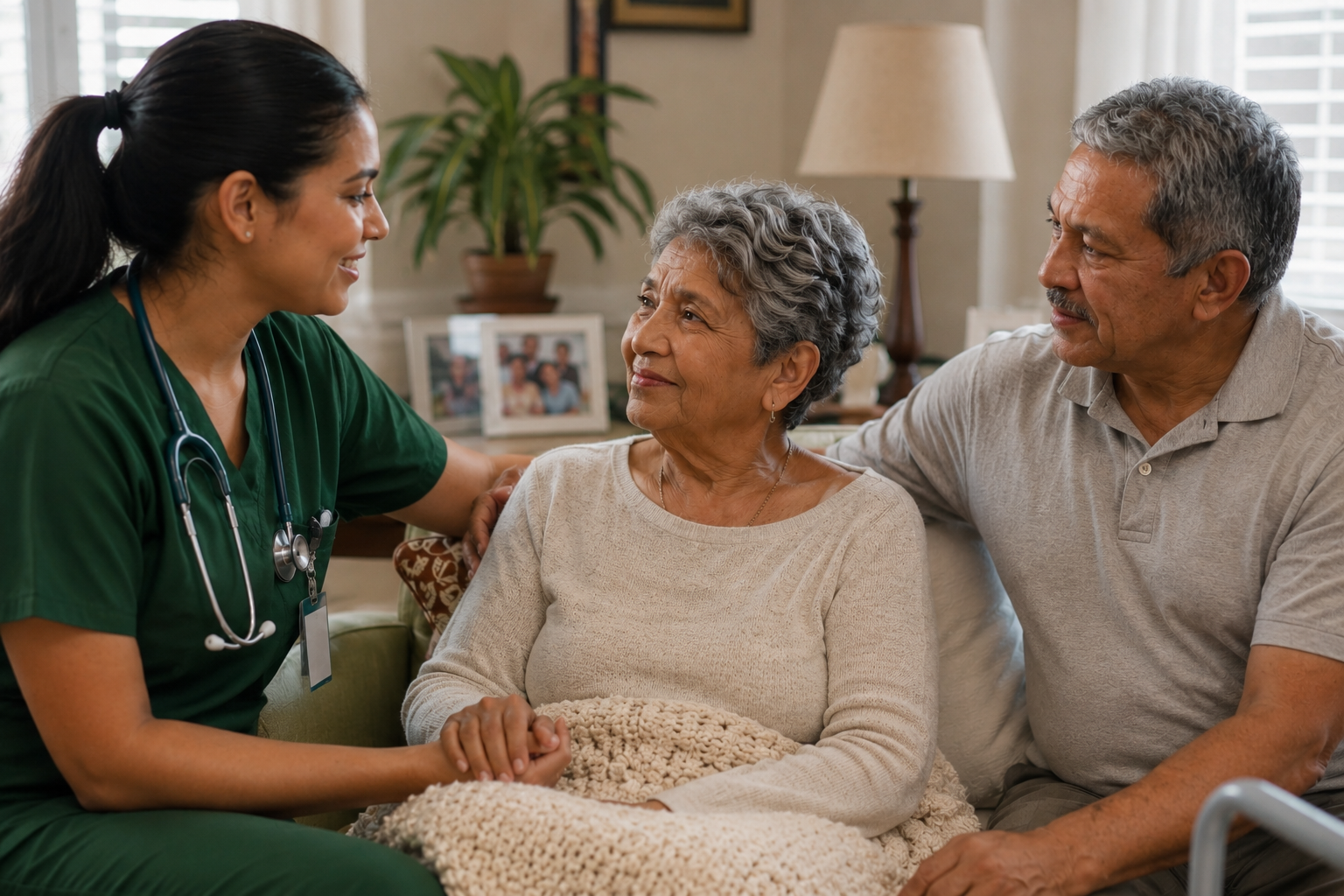
Sometimes a nurse simply sitting down and explaining things calmly can completely change how a family copes with a difficult situation.
Compassion matters more than people realize.
Hospice Is About Comfort, Dignity, and Support
Hospice is one of the most misunderstood areas of healthcare.
Many families initially believe Hospice means giving up.
But Hospice is not about giving up on a patient.
It is about focusing on comfort, dignity, peace, and quality of life.
It is about helping patients live as comfortably and meaningfully as possible while supporting the people who love them.
Hospice care provides pain management, symptom control, emotional support, spiritual support, education, and compassionate guidance during one of life’s most difficult journeys.
For many families, Hospice becomes the moment they finally feel supported instead of overwhelmed.
Many say the same thing afterward:
“We wish we understood Hospice sooner.”
Because Hospice is not about losing hope.
It is about changing the focus of care toward comfort, connection, and dignity.
It allows many patients to remain where they feel safest and most loved: home.
Surrounded by family.
Surrounded by memories.
Surrounded by comfort.
The Human Side of Healthcare
Some of the most important moments in healthcare never appear in medical records.
A patient smiling because they walked independently again.
A caregiver crying tears of relief after finally understanding the care plan.
A nurse calming a frightened family during a difficult night.
A therapist helping a patient regain confidence after a fall.
A Hospice patient peacefully sitting with loved ones nearby instead of feeling alone.
These moments matter deeply.
Because healthcare is not only about treating conditions.
It is about caring for people.
It is about protecting dignity during vulnerable moments in life.
Why Providers Trust Strong Home-Based Care
For physicians, case managers, discharge planners, rehab facilities, and referral coordinators, strong Home Health and Hospice care can significantly improve continuity of care after discharge.
Reliable communication.
Responsive coordination.
Patient education.
Monitoring high-risk patients.
Reducing preventable complications.
Helping families better understand the plan of care.
When providers know patients are being monitored, educated, and supported at home, transitions often become smoother and safer.
That partnership is extremely important in today’s healthcare environment.
Nobody Should Feel Alone During Recovery
Illness changes more than the patient.
It changes entire families.
It changes routines, emotions, finances, relationships, and daily life.
But compassionate care reminds people they do not have to go through those moments alone.
At IPR Healthcare, we believe Home Health and Hospice care should feel personal, compassionate, responsive, and human.
Because behind every diagnosis is a person.
Behind every referral is a family trying their best.
And behind every home visit is an opportunity to help someone feel safer, stronger, more informed, and more supported.
Learn More About IPR Healthcare
If you or a loved one may benefit from Home Health or Hospice services, or if you are a physician, case manager, discharge planner, or healthcare provider seeking compassionate and coordinated care for your patients, IPR Healthcare is here to help.
Learn more about our Home Health and Hospice services:
Website: https://iprhealthcare.com/
Instagram: https://www.instagram.com/iprhealthcare.tx/
Facebook: https://www.facebook.com/iprhealthcare
LinkedIn: https://www.linkedin.com/company/ipr-healthcare-inc/