

I see it often.
I walk into skilled nursing facilities, senior living communities, 55 plus residences, and nursing homes that are full of people. There is movement, conversation, televisions playing in the background, staff checking in and out of rooms. On the surface, nothing looks wrong. No one appears abandoned. No one is sitting alone in complete silence.
And yet if you stay long enough you begin to feel it.
Loneliness in seniors does not announce itself loudly. It does not always come with tears or sadness on display. More often it hides behind smiles, politeness, and small talk. It exists quietly, tucked between moments.
I notice it when I stop by to visit and someone immediately wants to sit with me. Not because they need help, and not because they are unhappy, but because they want to talk. They want to tell a story. They want to share something about who they were, where they have been, or what life once looked like.
Sometimes the stories go on for a while. Sometimes they circle back. Sometimes they drift into memories that feel far away. To me it feels like a good conversation, interesting, even grounding. I walk away having learned something or smiling at a story well told.
But for them it feels different.
I see it when the conversation naturally reaches its end but they gently pull it back. When I stand up to leave and they find one more thing to say. When they laugh softly and ask a question they already know the answer to just to keep me there a little longer.
It is rarely about the words.
It is about the moment.
It is about connection.
I first understood this deeply years ago, when I was still a nursing student in the Philippines.
As part of our training, my classmates and I visited a home for the aged called Kanlungan ni Maria (https://www.facebook.com/kanlungannimaria). It is a place for seniors who no longer have family. Some were once homeless. Some outlived everyone they loved. Some were abandoned. Others ended up there through circumstances life dealt them that they could not recover from alone.
As students, we were required to prepare a small presentation. We brought food. We sang. We tried to make them smile. At the time, it felt like a school requirement, something we needed to complete.
But once I started sitting down and listening, everything changed.
They told us their life stories. Some spoke of lives well lived. Others spoke openly about mistakes, regret, and hard choices. It was the first time I truly understood that just because someone is older does not mean they lived a perfect life. It showed me that not everyone was given the same opportunities I was.
It made me appreciate my parents more. I realized how hard they worked to give me and my two sisters the tools we needed to step into adulthood prepared. I realized how blessed I was in ways I had never fully acknowledged.
There was one senior woman in particular who stood out.
She was loud. She was funny. She demanded attention and made sure everyone noticed her. She laughed easily and filled the room with energy. But if you looked into her eyes long enough, you could see something deeper. A history of hardship that not many people could survive, let alone talk about.
I sat with her and listened as she shared her story. She had outlived much of her family. The few who remained were struggling with their own battles, drugs, mental illness, lives that made it impossible for them to care for her. That is how she ended up at Kanlungan ni Maria.
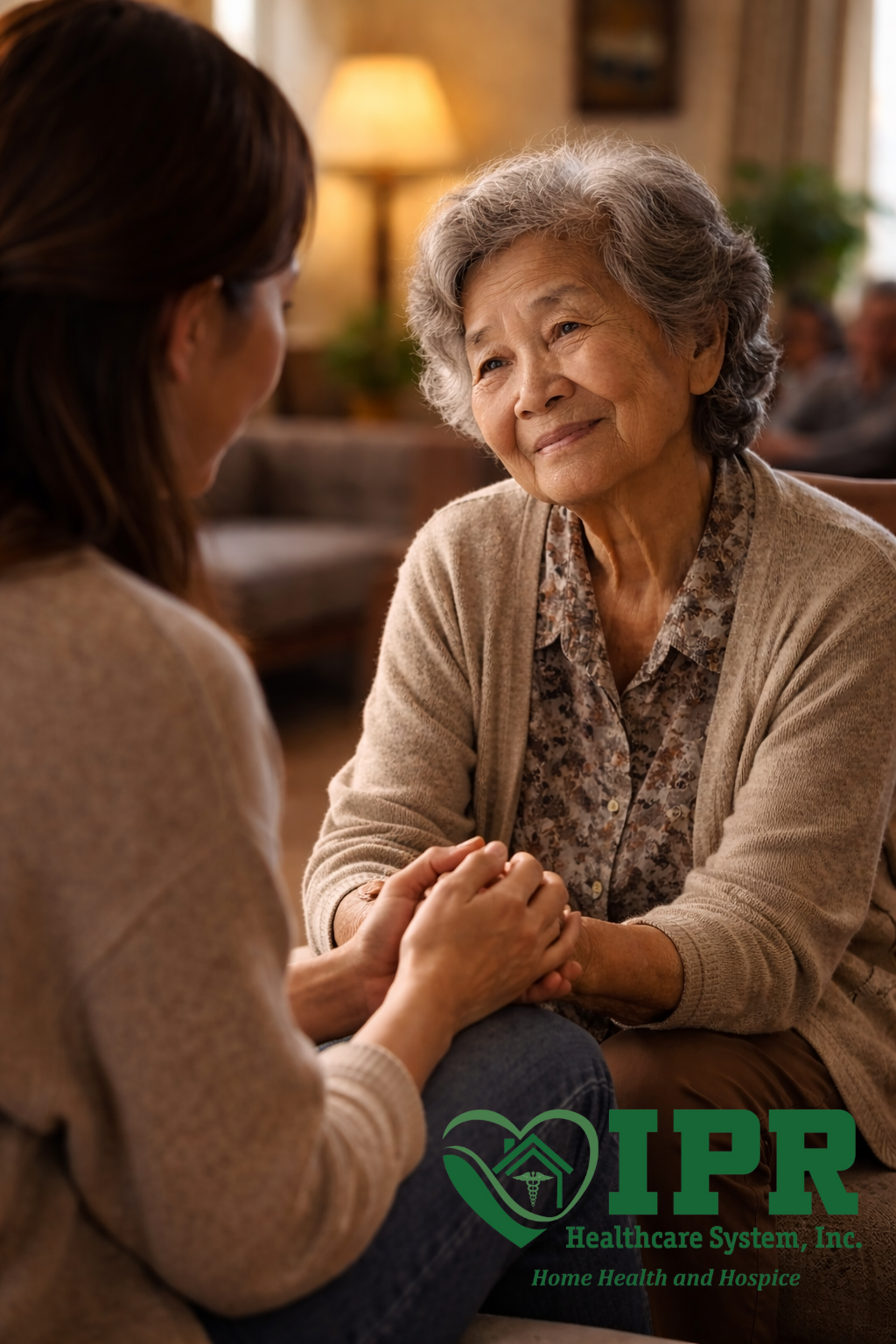
We talked for about ten minutes. I remember holding her hand as she spoke.
When my classmates and our clinical instructor began preparing to leave, I felt her grip tighten. She did not say anything. She did not need to. Her eyes told me everything. She was asking me not to go. Not out loud, but with everything she had.
That moment stayed with me.
It taught me that being the loudest does not mean being okay. It taught me that genuine human connection is not optional. It is necessary.
I went back to visit her on my own, when I had more control of my time. When she saw me again, she was delighted. Fulfilled. We talked longer that day. I learned more about her life, her memories, her losses.
I promised myself I would keep visiting Kanlungan ni Maria. I wanted to keep connecting with the seniors there.
Three weeks later, when I returned, I learned that she had passed.
She shaped a part of me forever. How I see people. How I understand loneliness. How I value connection.
Today, when I see seniors hold onto conversations just a little longer, I think of her.
They are not asking for much.
Just a few more minutes.
Just a little more conversation.
Just enough time to feel like they still matter to someone.
One day all of us will be older. All of us will carry stories we hope someone wants to hear. And all of us will wonder quietly if anyone still has time to sit and listen.
The next time an older person lingers in conversation, stays close a little longer, or lights up when you stop to talk, pause.
Stay.
Not to fix anything.
Not to teach or advise.
Just to be there.
Because sometimes that extra minute means more than we will ever know.
If this story stayed with you, let it change something small the next time you cross paths with an older adult. Sit a little longer. Listen without rushing. Let them tell their story, even if the moment feels ordinary to you. Sometimes what they are really asking for is not help or answers, but to be seen, heard, and remembered. And in giving that, you may walk away having received more than you expected.
To see more reflections, stories, and moments like this from IPR Healthcare System, Inc., you can find us here:
Facebook: https://www.facebook.com/iprhealthcaretx/
Instagram: https://www.instagram.com/iprhealthcare.tx/
LinkedIn: https://www.linkedin.com/company/ipr-healthcare-system-inc/